
10 Inspiring Kitchen Island Ideas for Every Home Style
In the modern American home, the kitchen is no longer just a place for meal prep; it is the command center of the household. It’s where kids do homework, where friends gather for wine during a dinner party, and where we start our mornings with coffee and a quick scroll through the news. At the very heart of this activity is the kitchen island. What once began as a simple, utilitarian workspace has evolved into an architectural statement piece that defines the flow and function of the entire house.
Choosing the right kitchen island is a high-stakes decision. It’s often the largest single piece of furniture in the room and serves as the visual anchor for your cabinetry and flooring. Whether you are working with a sprawling open-concept floor plan or a more modest galley kitchen, there is an island configuration that can unlock your home’s potential. In this guide, we’re breaking down ten distinct kitchen island ideas that prioritize both aesthetics and ergonomics, helping you create a space that is as hardworking as it is beautiful.
1. The Modern Waterfall EdgeThe waterfall island is perhaps the most iconic trend in contemporary kitchen design. It refers to a countertop that doesn’t just sit on top of the cabinetry but “pours” over the side all the way to the floor. This creates a continuous, seamless line of stone (usually marble, quartz, or quartzite) that hides the cabinet ends and creates a sleek, sculptural look. This design is highly favored in modern and minimalist homes because it eliminates visual clutter and emphasizes the natural beauty of the stone’s veining.
When planning a waterfall edge, the precision of the “mitered joint” is everything. You want the veins of the marble to match up perfectly at the corner where the horizontal surface meets the vertical drop. This creates the illusion of a single, massive block of stone. While it is a more expensive fabrication option, the payoff is a kitchen that feels incredibly high-end and architecturally significant. Because the sides are stone rather than wood, it is also incredibly durable against scuffs from barstools or vacuum cleaners. To keep the look balanced, pair a heavy waterfall island with simple, handle-less cabinetry and understated lighting so the stone remains the undisputed star of the show.
(adsbygoogle = window.adsbygoogle || []).push({});
2. The Multi-Level Entertainment HubOne of the most common complaints about single-level islands is that they put the “mess” of food prep right at eye level for guests sitting at the counter. The multi-level island solves this by creating distinct zones for different activities. Typically, this involves a standard counter-height section (36 inches) for chopping, washing, and cooking, paired with a raised bar-height section (42 inches) for seating. This physical tier acts as a backsplash, hiding dirty dishes or prep work from the rest of the room.
Beyond the practical “hide the mess” aspect, multi-level islands are superior for ergonomics. A higher bar allows guests to lean in comfortably while standing, making it feel more like a social “pub” environment rather than a formal dining area. It also allows you to mix materials; for example, you might use a durable quartz for the prep level and a warm, organic wood for the dining tier. This contrast adds visual depth to the kitchen. When designing this, ensure you have enough “knee room” (at least 12–15 inches) for the seating area to ensure guests can sit comfortably for long periods. This is the ultimate layout for families who love to host while they cook.
(adsbygoogle = window.adsbygoogle || []).push({});
3. The Statement Color ContrastFor a long time, the trend was to match the island cabinetry exactly to the perimeter cabinets. While this creates a uniform look, it can sometimes feel a bit flat or clinical. Designers are now leaning into the “Tuxedo Kitchen” or the “Contrast Island” look. This involves painting the island a bold, contrasting color to make it stand out as a piece of furniture rather than just an extension of the walls. Navy blue, forest green, and charcoal grey are the most popular choices for creating a sophisticated anchor in an otherwise white or light-colored kitchen.
This approach allows you to inject personality into the room without committing to a full-color kitchen. If you ever get tired of the color, repainting an island is a much smaller task than repainting an entire room of cabinetry. To make the contrast feel intentional, try to pull the color from elsewhere in the house—perhaps matching the island to the dining room walls or the living room velvet sofa. The island becomes the “bridge” that connects the kitchen to the rest of the living space. Finish the look with contrasting hardware; for example, if your white cabinets have silver pulls, give your navy island brass handles to make it feel like a custom-designed centerpiece.
(adsbygoogle = window.adsbygoogle || []).push({});
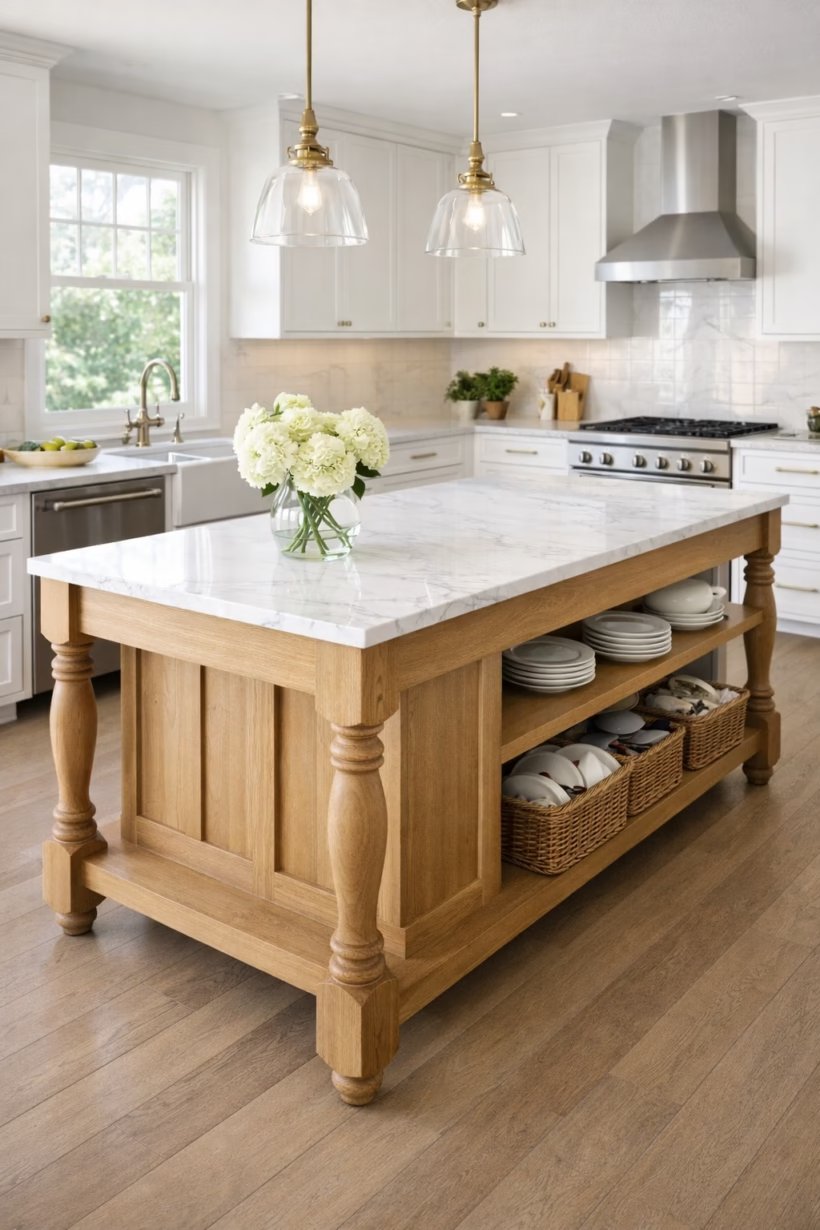
4. The Furniture-Style Island with LegsIn open-concept homes where the kitchen flows directly into the living room, you want the kitchen to feel less like a “utility zone” and more like a furnished living space. A “furniture-style” island achieves this by ditching the solid toe-kick base in favor of decorative legs or feet. This creates a gap between the island and the floor, making the piece feel lighter and more like a grand antique table or a custom sideboard.
This style is particularly effective in traditional, farmhouse, or transitional homes. You can incorporate “turned” legs for a classic look or simple tapered legs for a mid-century modern vibe. Because you can see the floor underneath, it makes a small kitchen feel more spacious. However, keep in mind that you lose the storage that would normally be in the base, and you’ll have to clean under it! Many homeowners compromise by having “closed” cabinetry in the center for storage and “open” legs on the seating side. This gives you the best of both worlds: the storage capacity of a standard island with the elegant, airy aesthetic of a piece of fine furniture.
(adsbygoogle = window.adsbygoogle || []).push({});
5. Integrated Appliance IntegrationThe Design Concept: If you want a truly high-performance kitchen, the island needs to be more than just a table; it needs to be a workstation. This means integrating appliances directly into the island cabinetry. The most popular additions are microwave drawers, wine fridges, and dishwasher drawers. By moving these items to the island, you free up valuable counter space and “wall real estate” in the main cabinet run, allowing for more windows or a more impressive range hood.
The microwave drawer is a game-changer for many. Instead of having a bulky microwave at eye level or taking up counter space, it is tucked away at waist height, making it easier to lift heavy dishes in and out. For those who love to entertain, a wine cooler built into the end of the island allows guests to help themselves without entering the “chef’s zone.” When planning an appliance-heavy island, electrical and plumbing requirements are paramount. You will need to coordinate with your contractor early in the process to run power and water through the floor. It’s an investment in infrastructure that pays off every time you prep a meal without having to walk across the kitchen ten times.
(adsbygoogle = window.adsbygoogle || []).push({});
6. The “Double Island” LuxuryFor those blessed with massive, grand kitchens, one island might not be enough. The “Double Island” trend is the ultimate luxury in American estate-style homes. Usually, these are configured in parallel. The first island—the “Working Island”—is located closer to the stove and sink. It houses the dishwasher, the prep sink, and the trash pull-outs. It is the engine room where the heavy lifting of cooking happens.
The second island—the “Social Island”—is located further out toward the living or dining area. This island is kept pristine, serving as a buffet for serving food or a dedicated spot for guests to sit. This separation of “work” and “social” ensures that the person cooking isn’t constantly bumping into people trying to get a snack. It also provides a massive amount of storage. To prevent the room from feeling like a sea of cabinetry, designers often vary the materials between the two islands. Perhaps the working island has a durable granite top, while the social island features a stunning, exotic wood slab. It is a bold architectural move that defines the “Luxury Kitchen” category.
7. The Reclaimed Wood/Butcher Block TopperStone is beautiful, but it can feel cold and hard. To bring warmth and an organic texture into a kitchen, many homeowners are opting for wood-topped islands. This is often done using a thick “butcher block” or a slab of reclaimed wood. Not only does this look incredible in a farmhouse or industrial-style kitchen, but it is also a dream for home chefs. A true butcher block surface is designed to be chopped on directly (provided it is finished with food-safe oils), turning your entire island into one massive cutting board.
Reclaimed wood adds a sense of history. Using wood salvaged from old barns or factories ensures that your island has a story and a unique patina that can’t be replicated in a factory. To keep the look from becoming too “rustic,” pair the wood top with modern, sleek cabinetry in a dark color like charcoal or black. The combination of “rough” wood and “smooth” paint creates a balanced, sophisticated aesthetic. Maintenance is a consideration here; you will need to oil the wood periodically to prevent it from drying out, but many find that the “lived-in” scratches and marks only add to the charm over time.
(adsbygoogle = window.adsbygoogle || []).push({});
8. The Circular or Curved IslandMost kitchens are a collection of hard right angles: the walls, the cabinets, the appliances, and the windows. This can sometimes make a room feel “sharp” or rigid. A curved or circular island is a fantastic way to break up those lines and soften the overall feel of the room. A rounded end on an island is also much more conducive to conversation; when guests sit around a curve, they are facing each other rather than sitting in a straight line like they are at a lunch counter.
Beyond the social benefits, curved islands improve “traffic flow.” If you have a high-traffic area where people are frequently walking past the island, a rounded corner prevents “hip-bumping” and allows for a smoother path through the room. Fabricating curved stone or cabinetry is a specialized skill and comes with a premium price tag, but the visual impact is undeniable. It makes the island feel like a custom piece of art. For a modern look, try a “pill-shaped” island (straight sides with rounded ends), or for a classic look, a grand semi-circle seating area attached to a rectangular prep zone.
(adsbygoogle = window.adsbygoogle || []).push({});
9. The Pendant-Focused Lighting StatementAn island is not truly complete until it is lit correctly. In many ways, the island is just a stage, and the pendant lights are the spotlight. Lighting is the “jewelry” of the kitchen. Because the island is usually in the center of the room, the lights hanging above it are often the first thing people notice when they walk in. The key to this look is scale. A common mistake is choosing pendants that are too small, which makes the island look insignificant.
The “Rule of Three” is a classic design principle for islands, but for very large islands, you might go with two massive, oversized lanterns or even one long linear fixture. The bottom of the pendants should typically hang 30 to 36 inches above the countertop. This height ensures that the light is focused on the workspace but doesn’t block the view of people standing across from each other. When choosing fixtures, consider the “visual weight.” If your island is a heavy, dark stone, light and airy glass globes can balance it out. If your kitchen is very white and bright, a bold black or brass geometric fixture can provide a much-needed focal point.
10. The Open-Shelving “Bistro” IslandIf you are someone who owns beautiful cookware, heirloom ceramics, or a collection of vintage cookbooks, why hide them behind closed doors? The “Bistro-style” island features open shelving on one or more sides. This gives the kitchen an airy, accessible feel reminiscent of a professional chef’s kitchen or a cozy European cafe. It’s an invitation to display the items that make your kitchen feel like yours.
Open shelving is also a great way to make a bulky island feel less imposing in a smaller kitchen. By removing the cabinet doors, you create “negative space” that allows the eye to travel through the piece. To keep this looking “curated” rather than “cluttered,” use the shelves for items with a consistent color palette—perhaps all white dishes or all wooden cutting boards. You can also use wicker or wire baskets on the lower shelves to hide the less attractive items like potatoes or linens while still keeping them within arm’s reach. This is a design choice that rewards the organized homeowner with a kitchen that feels lived-in and layered.
(adsbygoogle = window.adsbygoogle || []).push({});
The kitchen island is more than just extra counter space; it is the physical manifestation of how we live today. Whether you prioritize the high-performance utility of integrated appliances or the social luxury of a double-island layout, the right design can fundamentally change the “energy” of your home. By thoughtfully considering materials, lighting, and ergonomics, you can ensure your island is a beloved fixture for decades to come.