How to Decorate Your Front Porch with Flowers: 15 Stunning Ideas
If your front porch feels like it’s missing something — that warmth, that curb appeal you scroll past on Pinterest and save immediately — you’re not alone. I’ve been there. You pull into the driveway after a long day, glance at the front of your house, and it just looks… flat. Maybe there’s a forgotten doormat, one sad pot you bought two springs ago, and a whole lot of untapped potential.
The good news? You don’t need a landscape architect or a massive budget to transform your porch into something that genuinely makes people slow down when they walk by. Flowers do that. The right flowers, in the right spots, staged with even a little bit of intention, change everything about how a home feels — from the inside looking out and the outside looking in.
Here are 15 front porch flower ideas pulled straight from real design inspiration, with honest advice on what works, what’s actually easy to pull off, and what I’d do differently if I were starting over.
1. Line Your Porch Rail with Geraniums in Aged Terra Cotta PotsWho it’s for: Anyone with a long porch deck who wants a cottage-style look without overthinking it.
There’s a reason geraniums have been a front porch staple for generations — they’re practically unbeatable in terms of bloom time, color range, and low-maintenance personality. But the container you choose matters just as much as the flower itself. Weathered, chipped terra cotta pots have this organic quality that plastic or glazed containers just can’t replicate.
In the first image, the combination of red and pink geraniums staggered along a narrow wooden porch creates this incredibly layered, almost effortless display. Notice how some pots are slightly different heights — that’s not accidental. Varying the elevation prevents everything from looking like it was lined up with a ruler.
When to use this: Geraniums love full sun, so this works best on south- or west-facing porches with at least 6 hours of direct light daily.
Practical tip: Start with three anchor pots (your largest) and fill in with smaller ones. Mix at least two geranium colors — true red and soft pink, or coral and white — for depth. If your porch gets afternoon shade, swap in impatiens instead; they’ll give you a very similar look.
In my experience, the single biggest mistake people make with geranium displays is keeping all the pots the same size. Even just one oversized pot among medium ones immediately makes the arrangement look more designed.
2. Stack Begonias on Porch Steps for a Cascading EffectWho it’s for: Homeowners with covered front steps who want maximum impact with minimal effort.
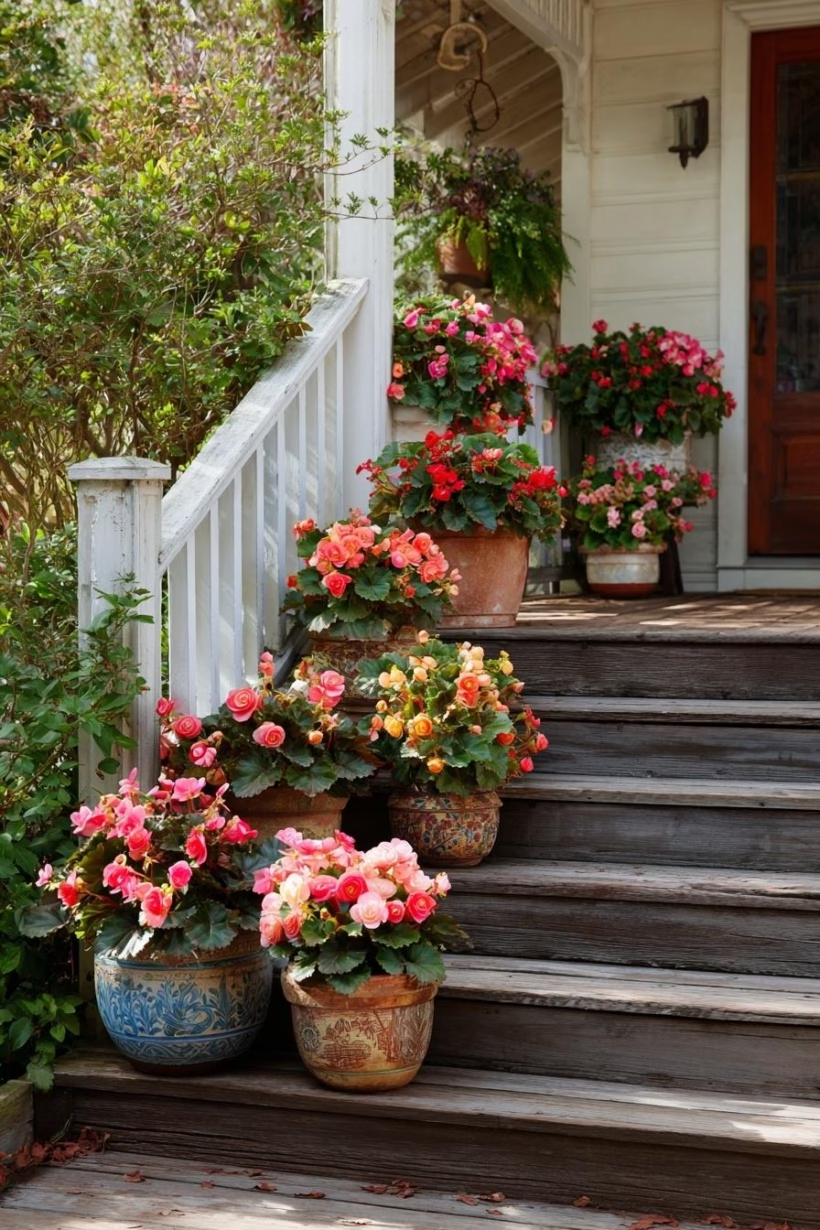
Wax begonias and tuberous begonias are absolute workhorses. The image of those pink-to-coral begonias cascading down wooden porch steps is one of the most achievable looks in this whole roundup — and yet it photographs like something from a Southern Living spread.
The trick here is treating each step like its own shelf. Place the largest, most mature pot at the top (closest to the door), and let the sizes graduate downward. The plants themselves will fill in and visually connect everything so it doesn’t look like you just set random pots on stairs.
Why this works: Covered porches filter harsh afternoon light, and begonias actually prefer that. They’ll bloom longer here than in full-blast sun, meaning your display holds through late summer when everything else is looking tired.
Practical tip: Use mismatched decorative pots — one blue-and-white ceramic, one classic terra cotta — rather than a matching set. It looks more collected than coordinated, which reads as authentically personal rather than freshly purchased.
I’ve noticed that the porches that look most “lived in” (in the best way) always have a little bit of visual chaos. Not every pot matching, a few leaves spilling over the edge, maybe one small pot tucked behind a larger one. Perfection is the enemy of warmth here.
3. Go Bold with Hanging Petunias in Purple and WhiteWho it’s for: People with a front door that needs a focal point, especially if the door itself is a statement color.
Petunias are one of those plants that become genuinely spectacular when given vertical space. That third image — hanging baskets overflowing with purple and white petunias framing a pale blue door — is the kind of porch that makes mail carriers stop and look twice. The cool blue of the door and the purple-to-white gradient of the flowers create a palette that feels intentional without being fussy.
Wicker baskets on the floor plus the hanging clusters above creates a multi-level effect that fills the porch without requiring you to have a ton of square footage.
When to use this: Late spring through early fall. Petunias need deadheading (snipping spent blooms) every week or so to keep them this full and floriferous. If you’re not up for that maintenance, wave petunias are a lower-fuss alternative.
Practical tip: Mix cascading petunias with upright ones in your baskets for more shape. A Supertunia or Wave variety in the hanging baskets, paired with standard multiflora petunias on the ground, gives you that lush layered look.
If you’re working with a small porch, two large hanging baskets flanking the door are more impactful than five small ones scattered around. Restraint creates drama.
4. Use Impatiens in Large Cream Pots for a Classic Southern LookWho it’s for: Anyone with shaded or semi-shaded porch steps who loves the look of a full, overflowing pot.
Impatiens have earned their reputation as one of the most reliable shade flowers available, and when you plant them in generously sized cream-colored pots and let them spill over the edges, the result is genuinely beautiful. That fourth image — stacked cream pots packed with pink, red, white, and lavender impatiens along wooden steps — looks like it belongs in front of a historic Charleston home.
The key detail most people miss: the pots are oversized relative to the plants. Cramming two or three impatiens into a small pot gives you a sad little bouquet effect. But drop six to eight plugs into a pot the size of a bucket, and you get that full, almost riotous abundance.
When to use this: Impatiens struggle in heat above 90°F. In hot climates, look for SunPatiens (a heat-tolerant hybrid) or New Guinea impatiens, which handle more sun and warmth.
Practical tip: Plant in a premixed potting soil with slow-release fertilizer already blended in. Impatiens are heavy feeders, and supplementing with a liquid bloom fertilizer every two weeks will keep them blooming without pause.
5. Hang a Swing Planter Loaded with HydrangeasWho it’s for: The person who wants their porch to feel like a scene from a slow summer novel.
This might be the most romantic idea in the entire list. A wooden swing hung from the ceiling, with a weathered white planter box full of pink and blue hydrangeas resting on it — that fifth image is pure porch perfection. Hydrangeas read as lush and abundant even when you only have a few plants. Their round, voluminous blooms fill visual space the way very few other flowers can.
The swing detail is optional, obviously. But if you do have a porch swing, turning the seat into a planter box is a genuinely brilliant use of a space that often sits empty between uses.
Why this works: Hydrangeas are naturally shade-tolerant, making them ideal for covered porches. They prefer morning sun and afternoon shade — exactly what most front porches offer.
Practical tip: Choose a bigleaf hydrangea (Hydrangea macrophylla) in a pre-colored variety if you want specific tones. Blue and pink hydrangeas in the same planter create that dreamy gradient effect you see in the image. If you want consistent blue, plant in acidic soil; alkaline soil will push the blooms toward pink.
6. Keep It Clean with Blue Lobelia in White PotsWho it’s for: Minimalists, or anyone whose porch architecture is already doing the decorative heavy lifting.
Sometimes less really is more. That sixth image — a single white ceramic pot packed with blue lobelia on a warm mahogany-toned deck, with more matching pots visible in the background — is proof that a restrained, repeated element can be more striking than a jumbled mix of flowers and colors.
Blue lobelia has this delicate, cloud-like quality. The tiny flowers bloom in cascading clusters that eventually spill over the pot edges, and that movement is part of the appeal. Against clean white pots and a warm wood deck, the blue reads almost violet in certain light.
When to use this: Lobelia is actually a cool-season performer. It’s happiest in spring and fall, and may go dormant or look ragged during peak summer heat. Plant it early, enjoy it through June, and consider replacing with heat-tolerant summer annuals if your summers get brutal.
Practical tip: Three identical pots of lobelia placed at varying heights along a railing or steps create a rhythm that feels designed without looking forced. Use a soil mix formulated for containers with good drainage — lobelia hates wet feet.
7. Plant Marigolds as a Porch Border for Bold ColorWho it’s for: Gardeners who want something cheerful, low-maintenance, and practical — marigolds actually repel certain insects.
African marigolds — the big, pompom-headed ones — planted in a thick row alongside a porch railing create this incredible golden border that’s almost aggressively cheerful. That seventh image captures exactly how vibrant this looks in natural light: rich golden-orange blooms against deep green foliage, all of it glowing in afternoon sun.
What I love about this approach is that it uses ground-level planting rather than containers. If your porch has a bed along the railing or steps, marigolds will fill it densely and reliably all summer long.
Why this works practically: Marigolds contain compounds that deter aphids, whiteflies, and even some nematodes in the soil. Planting them near your porch entrance is functional landscaping, not just aesthetic.
Practical tip: Deadhead regularly — every week or two — to keep the blooms coming. If you skip deadheading, the plant puts energy into seed production and flower output drops noticeably. Snipping spent heads takes five minutes and makes a real difference in longevity.
8. Fill Terra Cotta Pots with Mixed Zinnias for Summer MaximalismWho it’s for: People who love color, aren’t afraid of vibrancy, and want something that screams summer.
Zinnias in mixed colors — hot pink, orange, coral, magenta — spilling out of rustic terra cotta pots against a weathered wood facade is exactly the kind of image that gets pinned thousands of times for good reason. It’s maximalist in the best way. The colors shouldn’t technically all go together, and yet they absolutely do.
Unlike some of the more delicate flowers on this list, zinnias are genuinely tough. Heat? They love it. Drought? They’ll tolerate it. Full blazing afternoon sun? Bring it on.
When to use this: Zinnias are peak performers from midsummer through early fall. Start seeds indoors about 4 weeks before your last frost date, or buy transplants in late spring. They hit their stride in July and August when other flowers are flagging.
Practical tip: Don’t crowd them. Each zinnia plant in a container needs at least 6–8 inches of space. Overcrowding leads to poor air circulation and powdery mildew. One oversized pot with 5–6 plants in complementary colors will look more stunning than 12 plants crammed into the same container.
9. Create a Tall Statement Row with Snapdragons in Tree Stump PlantersWho it’s for: Anyone with a long covered porch who wants vertical interest without installing trellises or structures.
Snapdragons are underused on front porches, and it baffles me every season. They have natural height (12 to 36 inches, depending on variety), come in a stunning range of pastels and brights, and they thrive in the cooler temperatures of spring and early fall — exactly when you want your porch to look incredible for guests.
That ninth image is a masterclass in using the right planter for the look. Tree stump planters — rough, naturally textured cylinders — give the snapdragons a rustic, almost woodland feel that polished ceramic pots just wouldn’t achieve.
Why this works: The upright form of snapdragons creates height variety in a display that might otherwise be all mounded or trailing plants. Mix them with lower-growing companions like alyssum or lobularia at the base for a layered effect.
Practical tip: Snapdragons prefer cool weather and will actually pause blooming or go to seed in peak summer heat. In hot climates, treat them as a spring-and-fall annual — plant in March, enjoy through May, then replant in September.
10. Let Climbing Roses Take Over Your Porch for a Fairytale EntranceWho it’s for: The patient gardener. This is a long game, but the payoff is extraordinary.
Climbing roses trained along a porch post, over an arch, and across the facade of a house create a level of beauty that almost no other plant can match. That tenth image looks like it belongs on the cover of a romance novel — pink and blush roses everywhere, literally spilling across the porch and tumbling down from the arch.
This isn’t a one-season project. Climbing roses take two to three years to establish and begin their dramatic coverage. But once they do, they return every year and require relatively little beyond annual pruning and feeding.
When to use this: Plant in fall or early spring. Choose a repeat-blooming variety like ‘New Dawn’, ‘Constance Spry’, or ‘Climbing Cecile Brunner’ for the multi-flush flowering that keeps your porch looking lush for months.
Practical tip: Install the trellis or training system before you plant — it’s much harder to add later without damaging roots. Tie canes loosely to the support as they grow, bending them horizontally to encourage more lateral flowering stems. Horizontal canes produce more blooms than vertical ones.
11. Mix Lavender and Phlox for a Fragrant, Provence-Inspired PorchWho it’s for: People who want their porch to engage more than just the eyes — and who appreciate low-maintenance perennial options.
That eleventh image hits something deep: a weathered farmhouse-style porch with aged stone pots full of lavender, white phlox, and pink blooms, paired with a fern in a vintage urn. The combination smells as good as it looks. Lavender’s gray-green foliage and purple spikes are striking on their own, but paired with white and pink flowering companions, the effect feels very South of France.
Lavender is technically a perennial in USDA zones 5–8, meaning it comes back year after year if you’re in the right climate. That changes the economics of porch planting considerably.
Why this works: The texture contrast is part of the magic. Lavender’s fine, feathery foliage against the more solid, rounded leaves of phlox creates visual complexity that monochromatic or same-texture plantings lack.
Practical tip: Lavender needs excellent drainage above everything else. In containers, use a sandy or gritty mix, not standard potting soil — standard mixes hold too much moisture and lavender roots will rot. Terracotta pots (which breathe) are a better choice than plastic or glazed containers for this plant.
12. Place a Statement Dahlia at Your Porch Entry for DramaWho it’s for: Anyone who wants a single, show-stopping plant rather than a collection.
Sometimes one extraordinary plant does more than ten ordinary ones. That twelfth image proves it: a single large dahlia — deep crimson, dinner-plate sized blooms — growing next to an ornate wrought-iron railing on a historic-looking porch is just breathtaking. The dark flowers against the patinated metal and aged wood create a richness that feels almost Victorian.
Dahlias come in an overwhelming range of forms, from the small pompom types to the massive dinner-plate varieties that can reach 10–12 inches across. For porch display, the medium-sized ball and decorative types (4–6 inch blooms) tend to be the most wind-resistant and longest-lasting.
When to use this: Dahlias are summer-to-fall bloomers. Plant tubers after your last frost and expect blooms starting in July, continuing through the first hard freeze. In warm climates, they essentially bloom until you get tired of them.
Practical tip: Dahlias in containers need a large pot — minimum 5 gallons per plant — and consistent moisture. They’re heavier feeders than most annuals, so a monthly application of a low-nitrogen, high-phosphorus fertilizer (something like a 5-10-10 ratio) will push flowering.
13. Hang Fuchsia Baskets for Shaded Porch DramaWho it’s for: People with north-facing porches or deep overhangs where sun-loving flowers struggle.
Fuchsia might be the most underrated hanging basket plant for shaded porches. Those pendulous, two-toned blooms — often a vivid magenta-and-white or red-and-purple combination — have a dramatic, almost theatrical quality that nothing else quite matches. That thirteenth image, with its warm golden-hour light catching fuchsia cascading from a wrought-iron hanging basket, is everything.
The key thing most people don’t know about fuchsia: it genuinely prefers shade. It’s one of the rare plants that performs better with less sun. A deep covered porch that would kill most flowering plants is actually ideal fuchsia territory.
Why this works: The trailing growth habit means fuchsia naturally wants to hang. In a basket, it will spill and cascade in every direction, creating a full globe of bloom over the course of the season.
Practical tip: Fuchsia is thirsty. In a hanging basket, check moisture daily in warm weather — the combination of heat and air circulation dries them out faster than ground-level containers. Self-watering baskets with water reservoirs can genuinely be a game-changer here.
14. Combine Geraniums and Petunias on a Classic Wraparound PorchWho it’s for: Homeowners with generous wraparound porches who want to create a living, breathing seating area.
A wraparound porch is one of those architectural features that almost demands a floral treatment. That fourteenth image — geraniums and petunias in urns, hanging baskets, and large containers lining both sides of the porch walkway — shows exactly how to use flowers to define a space and make it feel like an outdoor room.
The bamboo in the background acts as a natural privacy screen, which is a clever combination of functional landscaping and aesthetic layering. But the real magic is how the flower placement creates pathways and seating zones without any hard structure at all.
When to use this: This kind of full porch installation is best planted in late spring, after your last frost. By midsummer, everything will have grown in and filled out to that lush, overflowing look.
Practical tip: When mixing container plantings, use the thriller-filler-spiller formula:
Thriller: one tall or dramatic plant (like an upright geranium) Filler: mounding mid-size plants (like compact petunias or alyssum) Spiller: trailing plants that cascade over the edge (like ivy or wave petunias)This combination in a single large pot creates more visual interest than any single-species planting.
15. Ground the Porch with Hostas and Shade-Tolerant PerennialsWho it’s for: People who want low-maintenance beauty that returns every year without replanting.
That fifteenth image is different from the rest of this list — it’s quieter, greener, more textural. And honestly? Sometimes that’s exactly what a porch needs. Hostas are perennial workhorses in shade gardens, and the variegated varieties (green with cream or yellow margins) have a brightness that makes dark, shaded areas feel lively rather than dingy.
The impatiens and creeping plants tucked between the hostas add pops of color without requiring a complete overhaul every season. This is layered, thoughtful planting that grows and improves over years rather than needing full replacement each spring.
Why this works: Hostas grow larger every year. A plant that fills a 12-inch space in its first season may be 3 feet wide and dramatic by year five. You’re essentially investing in the future version of your porch garden.
Practical tip: Divide hostas every three to four years when they get congested — the divided pieces can go into other spots in your yard or be given away. Pair them with astilbe, coral bells (Heuchera), or ferns for a shaded porch planting that requires very little water or attention once established.
Final ThoughtsYour front porch is the first thing people see — and, more importantly, the first thing you see when you come home. It doesn’t take a full renovation or a landscaping crew to make it feel welcoming and beautiful. A few well-chosen plants, thoughtfully placed, can completely shift the character of your home’s exterior.
If I could give you one piece of advice? Start with two or three ideas from this list rather than trying to do everything at once. Pick the approach that fits your light conditions and your maintenance tolerance, and go deep on that rather than spreading yourself thin. A single spectacular arrangement — like those rose-covered porch posts or the hydrangea swing planter — will always outshine twenty mediocre ones.
Plant something this weekend. Your porch is waiting.