
If your backyard feels more like a solar panel than a place to relax, you’re not alone. Every summer, millions of homeowners drag their patio furniture inside before noon because the sun just won’t quit. You buy the cute outdoor cushions, you string the lights, you set up the side table with a little plant on it — and then by 11 a.m., you’re already sweating through your shirt and retreating back inside.
The truth is, a beautiful backyard without shade isn’t really a usable backyard. It’s just a very expensive patch of hot ground.
I’ve spent a lot of time researching, testing, and obsessing over outdoor spaces — and I’ve pulled together 16 backyard shade ideas that cover everything from the quick weekend fix to the full structural commitment. Whether you’re working with a tiny urban patio or a sprawling suburban yard, there’s something here that’ll make your outdoor space actually livable from May through September.
Let’s get into it.
1. The Vine-Covered Pergola: Living Shade That Only Gets Better With Age
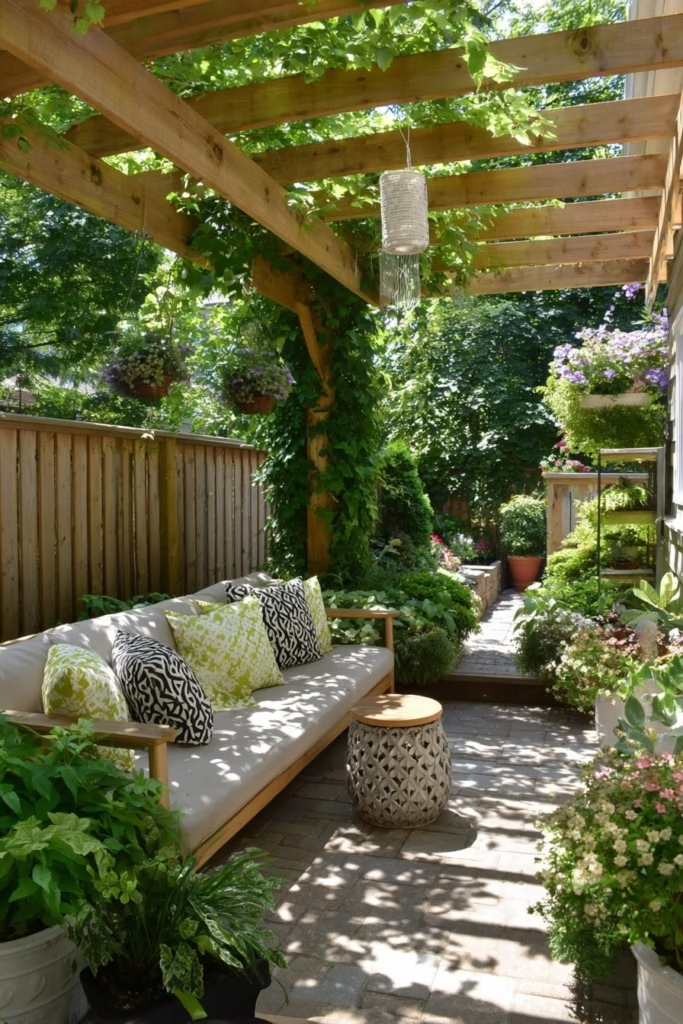
Who is this for? Anyone who wants shade that feels organic and earned rather than installed. If you love the look of cottage gardens or English-style outdoor rooms, this is your move.
Why it works: Vines like wisteria, Virginia creeper, or grapevines grow thick and fast, eventually turning the pergola roof into a near-solid canopy. The leaves filter light rather than blocking it entirely, so you get shade without that cave-like feeling. Plus, in winter when the leaves drop, you actually get more sun — the structure adapts to the seasons.
When to use it: This is the right call when you have at least a few years to let it develop. It’s not a quick fix. But if you’re planting yourself firmly in a home for the long haul, no other shade option gives you this kind of reward over time.
Practical tip: Plant fast-growing annual vines like moonflower or morning glory the first year to get immediate coverage while your perennial vines establish. Wisteria takes 3–5 years to fully cover a pergola, but the wait is absolutely worth it.
In my experience, cedar or redwood pergolas pair best with climbing plants — they weather naturally to a silver-gray that looks gorgeous against green foliage, and you don’t have to worry as much about rot.
2. Pergola With Roller Shades: When You Need Flexibility Without Sacrificing Style
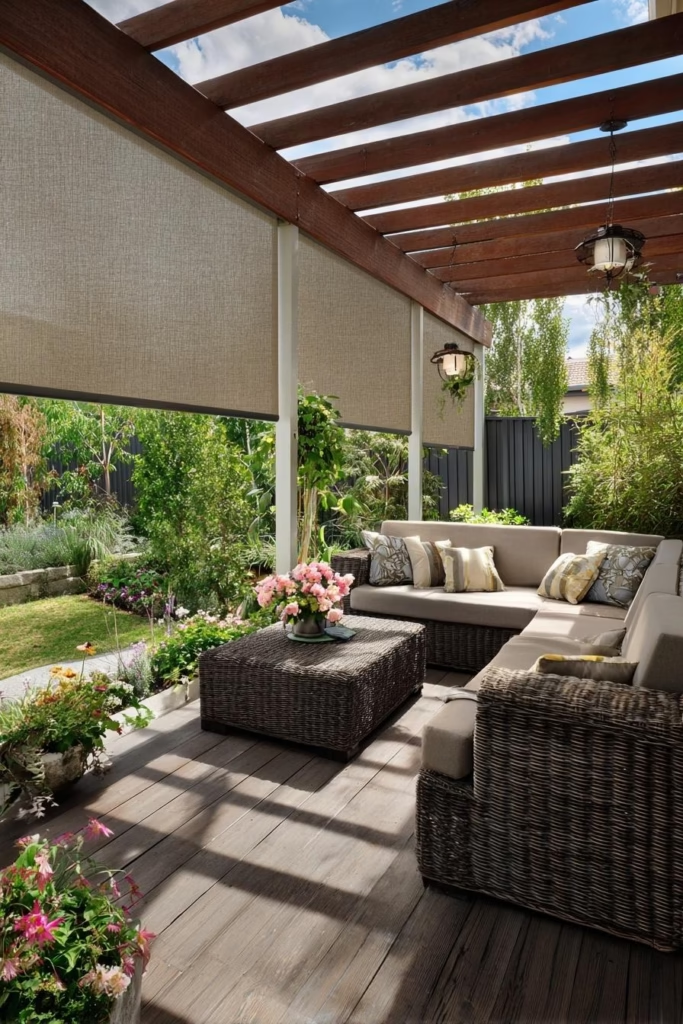
Who is this for? Homeowners who entertain frequently and need to control the light throughout the day. If you eat dinner outside at 7 p.m. when the western sun is brutal, or if your patio faces southwest and cooks all afternoon, roller shades are a practical lifesaver.
Why it works: Pergola roller shades (sometimes called exterior solar shades) block UV rays and reduce glare while still allowing airflow. Unlike solid walls or screens, they filter rather than eliminate — so you maintain the outdoor feel while dramatically cutting heat and sun exposure.
When to use it: Most useful on the west or south-facing sides of a pergola, where the sun hits hardest in late afternoon. You don’t need them on all four sides — one or two panels make a huge difference.
Practical tip: Look for shades with an “openness factor” of 5–10% — low enough to provide real shade, high enough that you can still see the garden. Motorized versions are worth the splurge if your pergola is large; manually rolling a wide shade every day gets old fast.
I’ve noticed that dark pergolas like this one pair best with neutral-toned shades. White shades on dark wood can feel a little stark. Sand, linen, or warm gray tones blend seamlessly and photograph beautifully, which matters if you’re ever selling the house.
3. The Retractable Awning: The Most Underrated Backyard Upgrade Nobody Talks About Enough
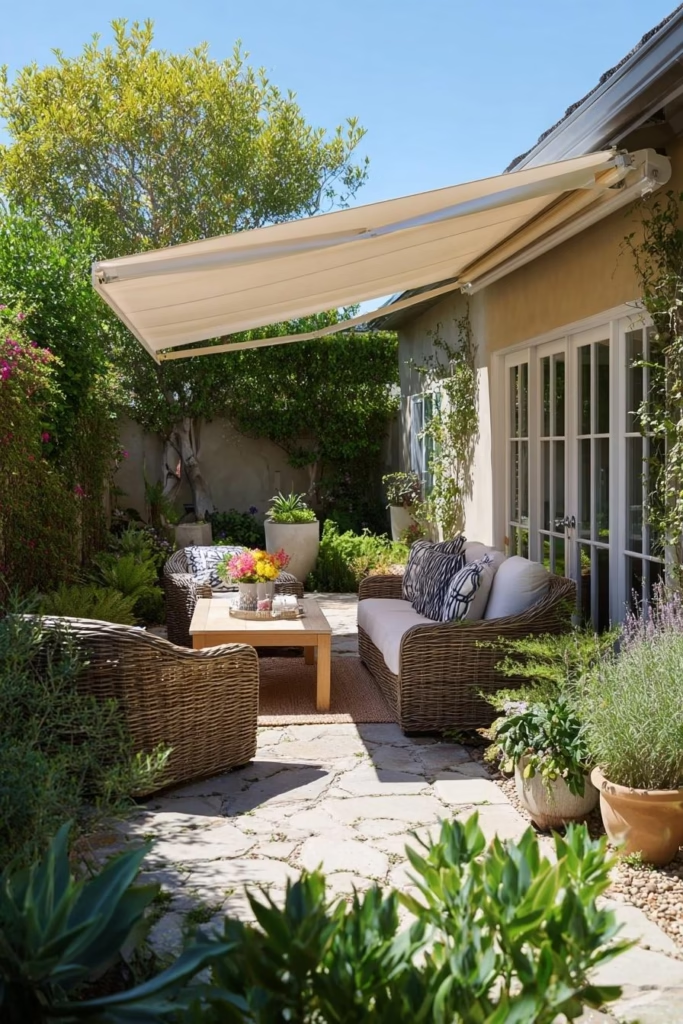
Who is this for? Homeowners who don’t want permanent structure but need serious coverage. If your backyard is rented, if HOA rules are a headache, or if you like flexibility, this is the answer.
Why it works: A retractable awning mounts directly to the exterior wall of your house and extends outward anywhere from 8 to 16 feet. When you don’t need it, it retracts completely out of sight. When you do, you’ve got a solid shade structure in about 30 seconds. Modern awnings are UV-resistant and weatherproof, and many come with wind sensors that automatically retract the awning in a storm.
When to use it: Any time you want shade on demand without committing to a pergola or gazebo. Renters, this is your answer. People with limited yard space, this is your answer too — the awning doesn’t take up square footage on the ground.
Practical tip: Have the awning professionally measured and installed. A DIY awning mount on a weak fascia board is an accident waiting to happen, especially in windy weather. Size it so it reaches at least 10 feet out from the wall for meaningful coverage.
If you’re working with a small Mediterranean-style courtyard like the one in image 3, a cream or sand-colored awning feels infinitely more expensive than a bright white one. The warmth blends with the stone and the planting palette beautifully.
4. A Simple Patio Umbrella: Never Underestimate the Classic
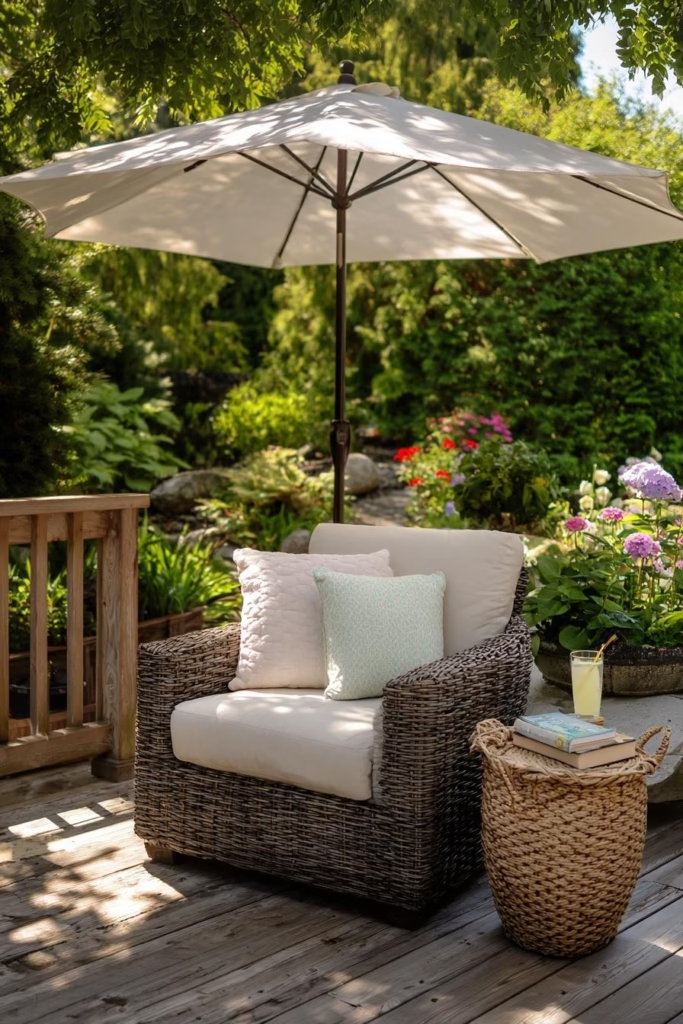
Who is this for? Apartment dwellers with small balconies, people who need shade for a single seating spot, or anyone who wants a no-commitment solution they can move around.
Why it works: The beauty of a patio umbrella is pure simplicity. No installation, no permits, no contractor. A good-quality 9- to 11-foot umbrella provides ample shade for one or two people and can be angled and tilted to track the sun throughout the day.
When to use it: When you have a specific spot — a reading chair, a dining table for two — that needs shade without any of the fuss. Also perfect as a secondary shade solution alongside a larger structure.
Practical tip: Always buy a heavy base. The umbrella you buy at the garden center for $50 will be fine; the $15 base it comes with absolutely will not survive a breeze. Invest in a 50-pound weighted base, and if you have a deck, anchor it to the boards for extra stability.
I’ve noticed that people consistently undersize their outdoor umbrellas. If you’re shading a dining table for four, you need at least an 11-foot umbrella. Get the biggest size you think you need, then go one size up.
5. A Wooden Gazebo With Curtains: The Ultimate Backyard Room
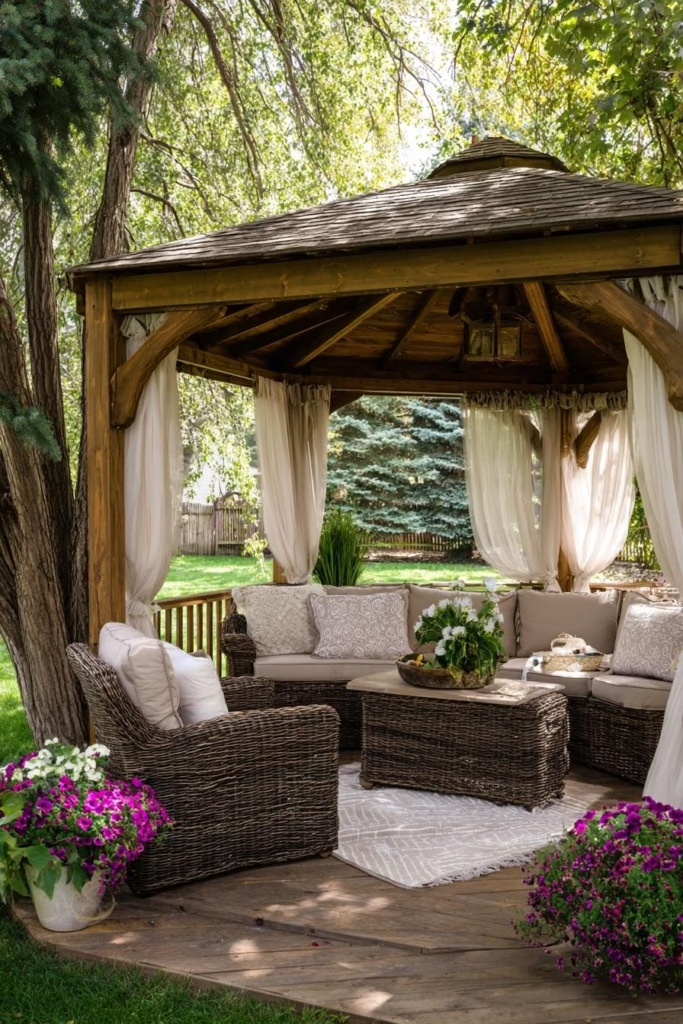
Who is this for? Homeowners with generous yard space who want to create a destination — a place that feels like a room, not just a furniture arrangement. This is also perfect if you have an ugly view on one side (a neighbor’s fence, an AC unit) that you want to block out.
Why it works: A gazebo with a solid or shingled roof gives you rain protection as well as sun protection — which a pergola alone can’t claim. The curtains add privacy and romance, and in the evening with string lights, the whole thing transforms into an outdoor living room that happens to have walls.
When to use it: Year-round use in milder climates. In colder zones, it’s a three-season space that anchors the garden visually even in winter.
Practical tip: Anchor curtain panels to the outside of each post with tie-backs rather than letting them flap freely. Outdoor curtain fabric (Sunbrella or similar UV-resistant material) will last several seasons; regular indoor drapes will degrade and mildew within a year outside.
In my experience, a gazebo is the single highest-impact upgrade you can make to a backyard from a curb-appeal standpoint. Real estate agents will tell you the same thing. It photographs like a dream and it dramatically extends the perceived living space of the home.
6. Vine Pergola on a Deck: Overhead Greenery That Feels Like a Forest Canopy
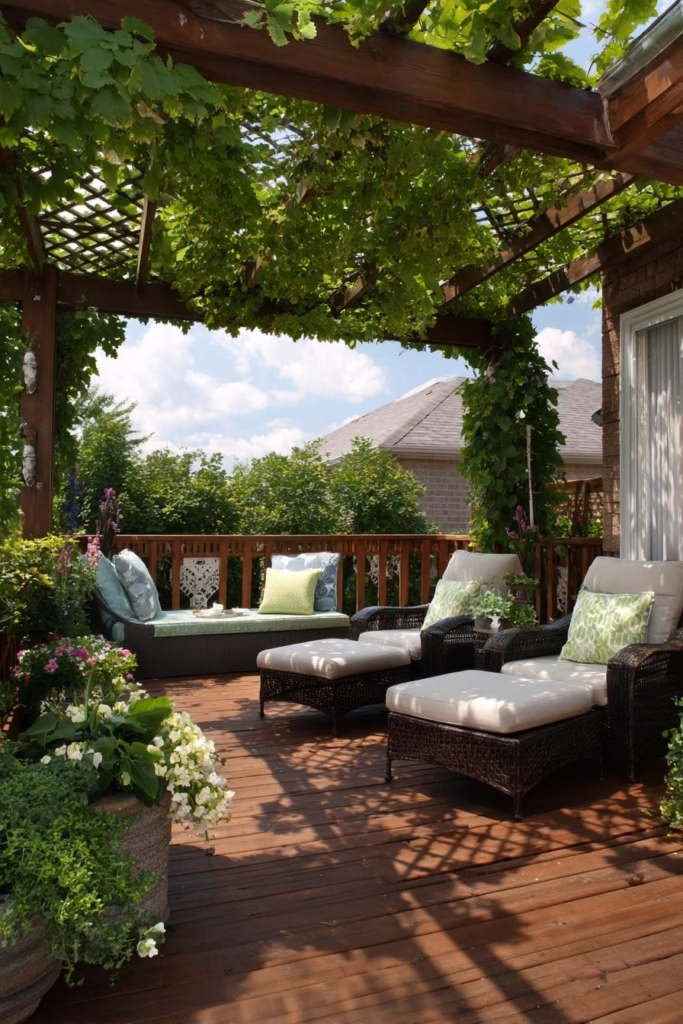
Who is this for? Anyone who wants serious shade and is willing to wait a growing season or two for it. Deck owners especially — because the pergola connects directly to the house and the vine overhead creates a seamless transition from indoors to out.
Why it works: A grapevine pergola does something that no fabric shade structure can replicate — it breathes. Air circulates freely underneath, which means it doesn’t trap heat the way a solid roof can. The living canopy also acts as a natural humidifier and keeps the space a few degrees cooler than a bare patio.
When to use it: Perfect for west-facing decks that get hammered by afternoon sun, or for any deck where you want to create a sense of enclosure without building walls.
Practical tip: Grapevines are ideal for pergola coverage — they grow vigorously, the fruit is a bonus, and the fall color is spectacular. Plant one vine per pergola post for the fastest coverage. Train the horizontal branches along the beams using garden twine for the first year until they take hold.
7. Outdoor Curtains as a Shade Wall: Soft, Romantic, and Surprisingly Effective
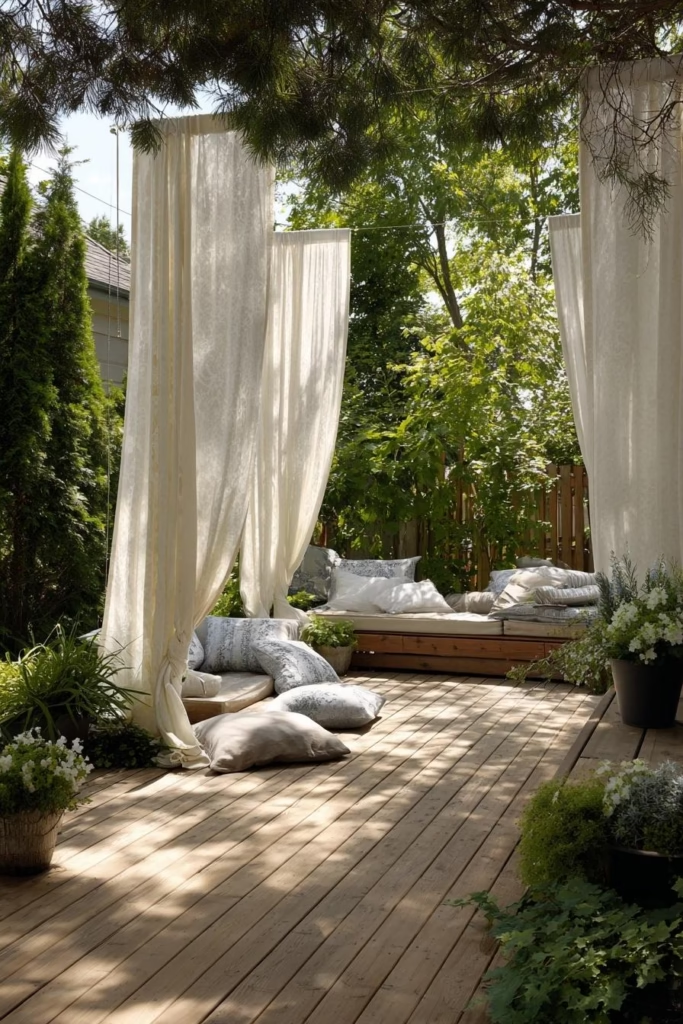
Who is this for? Bohemian decorators, people who love the outdoors but want privacy as much as shade, and anyone working with natural shade from trees who just needs to control horizontal light exposure.
Why it works: Outdoor curtain panels block low-angle sun (morning and late afternoon) far better than overhead shade structures. If the sun is blazing in from the side rather than directly overhead, curtains are actually the more logical solution. They also create privacy from neighbors without the permanence of a fence.
When to use it: Morning patios that face east, or late-afternoon spots that face west. Also perfect for adding intimacy to an open deck where you feel too exposed.
Practical tip: Use outdoor-rated curtain wire (stainless steel clothesline wire works perfectly) and proper turnbuckles to keep the line taut. Loose wire makes panels bunch and droop, which looks sloppy. Weight the bottom hem with drapery weights or sew in a strip of metal rod to keep panels hanging straight even in a breeze.
8. The Overgrown Pergola: When Maximalism Is the Point
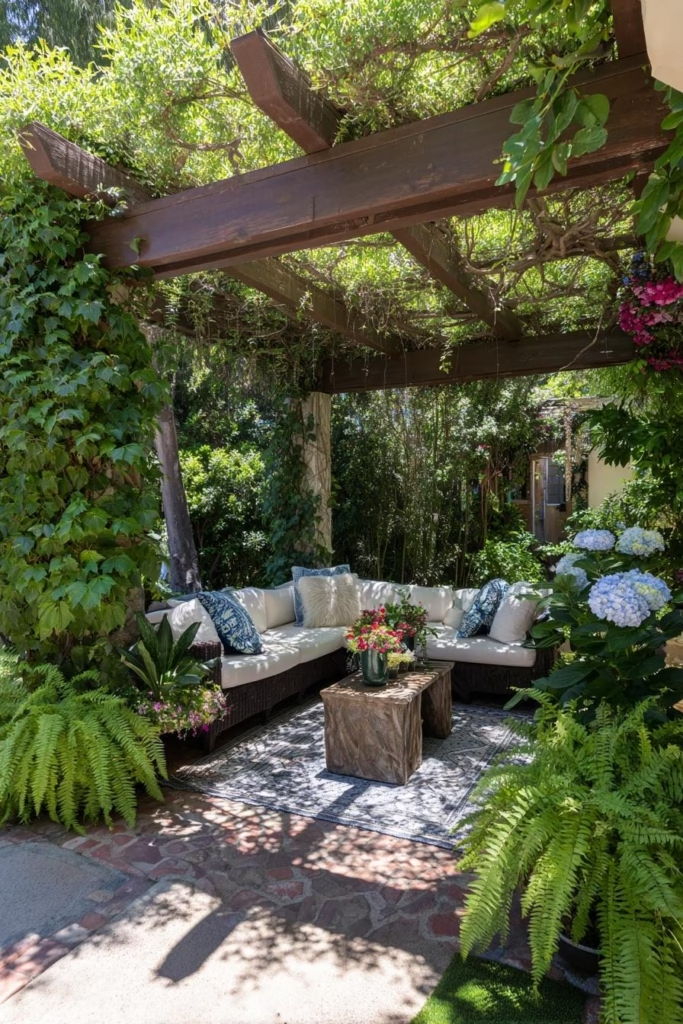
Who is this for? Plant lovers. Anyone who finds a bare pergola a little underwhelming and wants to create a shaded space that feels almost jungle-like. This style is especially suited to warm, humid climates where plants grow aggressively.
Why it works: When vines are allowed to grow not just over the roof but down the posts and across nearby walls, the entire structure becomes a green room. The density of foliage creates shade that’s both effective and beautiful — and it evolves every season.
When to use it: Southern climates and coastal regions where growing seasons are long. Also ideal for backyards with older, established structures — an aging pergola looks much better draped in plants than painted or stained.
Practical tip: Include a mix of flowering vines (bougainvillea, jasmine, clematis) and foliage vines (Virginia creeper, Boston ivy) for year-round interest. Flowering vines peak in spring and summer; foliage vines carry the color in fall.
9. Shade Sail Over a Dining Area: Modern, Clean, and Genuinely Practical
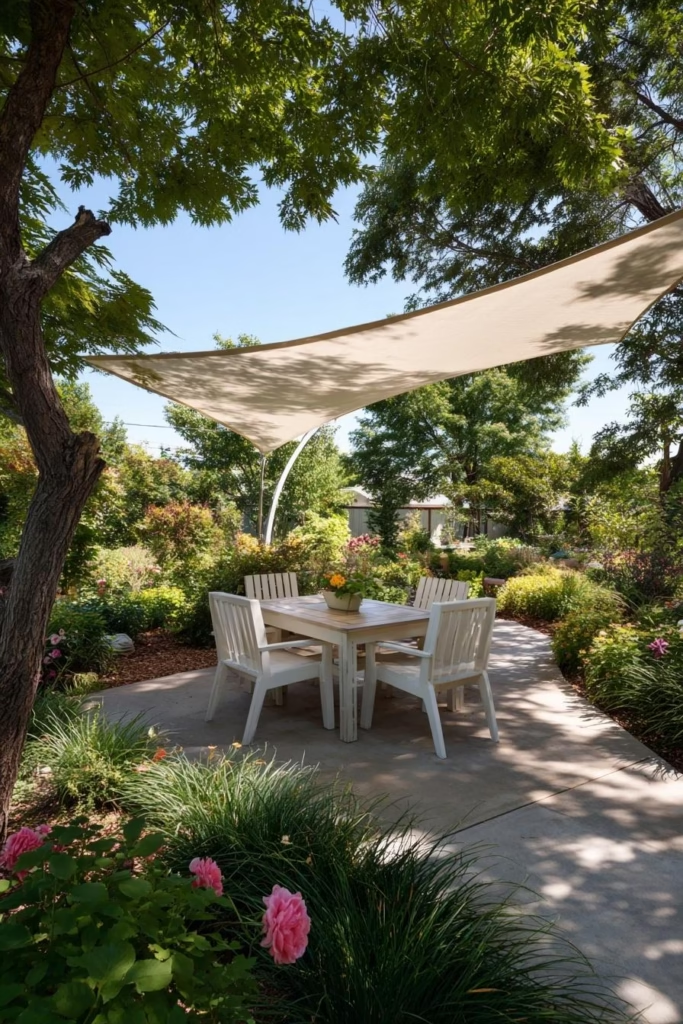
Who is this for? Homeowners who prefer a contemporary look and want real sun protection without the visual weight of a pergola or gazebo. Also the most budget-friendly permanent shade solution on this list.
Why it works: Shade sails are made from HDPE (high-density polyethylene) fabric that blocks 90–95% of UV rays while remaining breathable — so no heat trap underneath. Triangular sails are the most versatile shape and can be layered or overlapped for increased coverage.
When to use it: Open patios and backyards with existing anchor points (trees, fence posts, or house walls). Also excellent for playgrounds or pool areas where you need wide coverage without blocking sightlines.
Practical tip: Always install shade sail attachment points higher than the sail itself so it hangs at an angle — flat installation puddles water and sags. A 15–20 degree angle gives it proper tension and allows rain to run off. Use stainless steel hardware; zinc-plated fittings corrode within a season.
10. Patio Umbrella in a Lush Garden Setting: When Context Is Everything
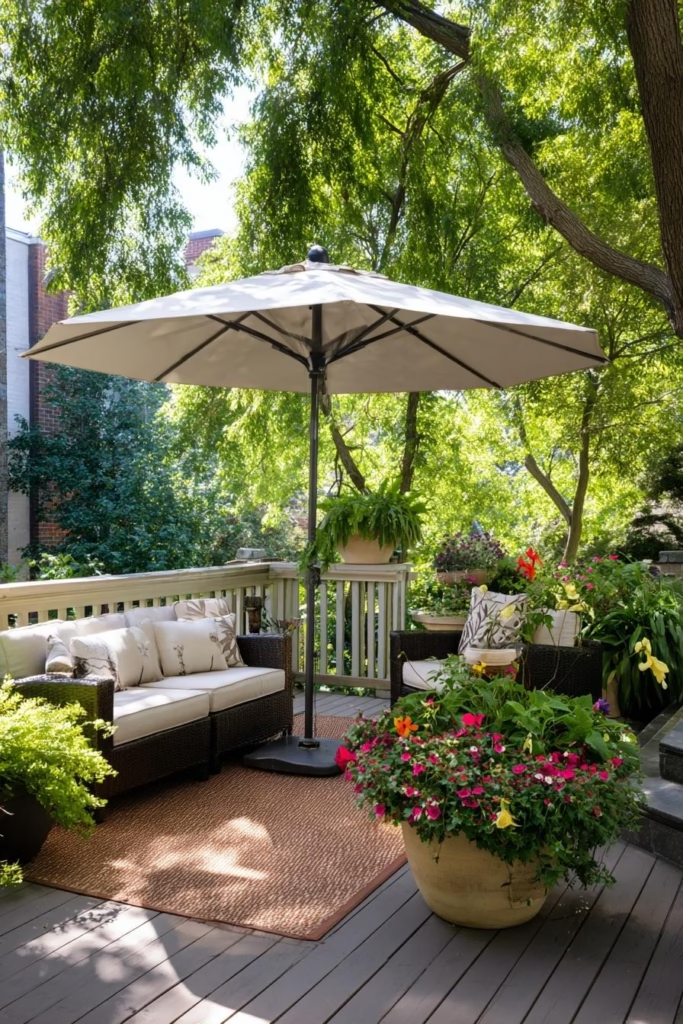
Who is this for? Gardeners who’ve spent years building a lush outdoor space and just need a practical shade solution that doesn’t compete with all the planting.
Why it works: In this case, the umbrella isn’t doing all the work — it’s filling in the gap where the tree canopy opens up. The result is layered shade that feels natural rather than installed.
Practical tip: If you have mature trees nearby, choose an umbrella color that reads as neutral against the foliage. Cream, beige, and warm gray all disappear into the scene; bright white can look harsh against deep green.
11. Pergola With Hanging Curtains: Privacy and Shade in One Elegant Move
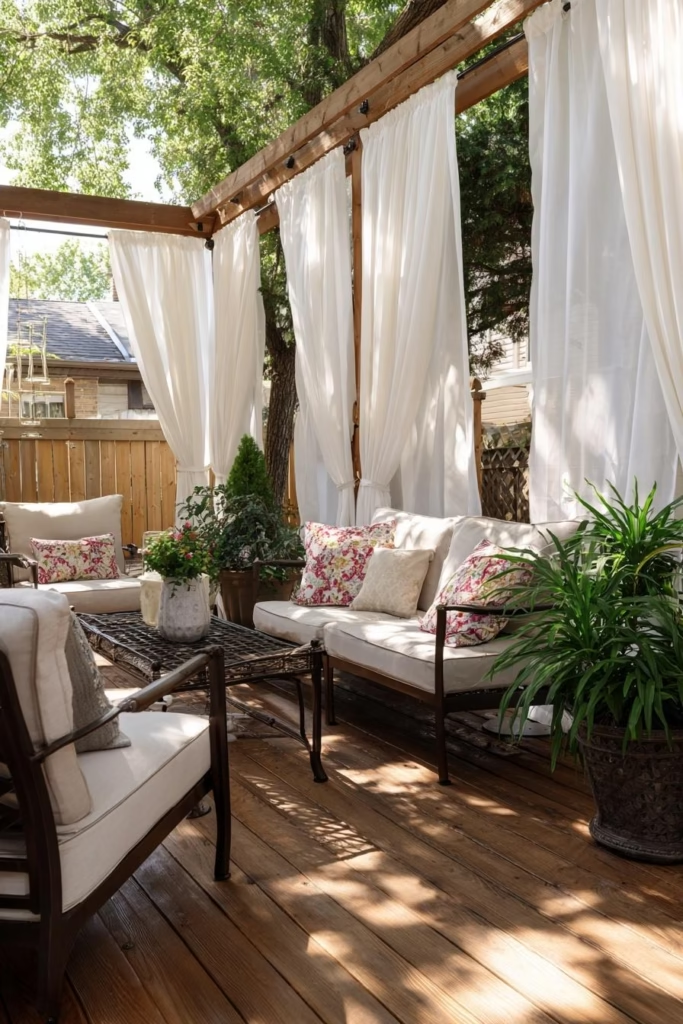
Who is this for? Urban homeowners with close neighbors. If your backyard feels overlooked on multiple sides, this solution is far faster and less expensive than a privacy fence — and far more attractive.
Why it works: Side-hung curtains don’t provide overhead shade, but they block the low-angle sun that hits you in the face during golden hour. They also dramatically reduce the feeling of being exposed, which is its own kind of comfort.
Practical tip: Install curtain panels on rings rather than threading them directly onto a rod — it makes opening and closing them much smoother. Buy outdoor-rated fabric in a color that you’d want to see from inside the house looking out; you’ll see those curtains as much as anyone on the outside will.
12. Bamboo Pergola With Hammock: The Most Relaxing Shade Setup You’ll Ever Build
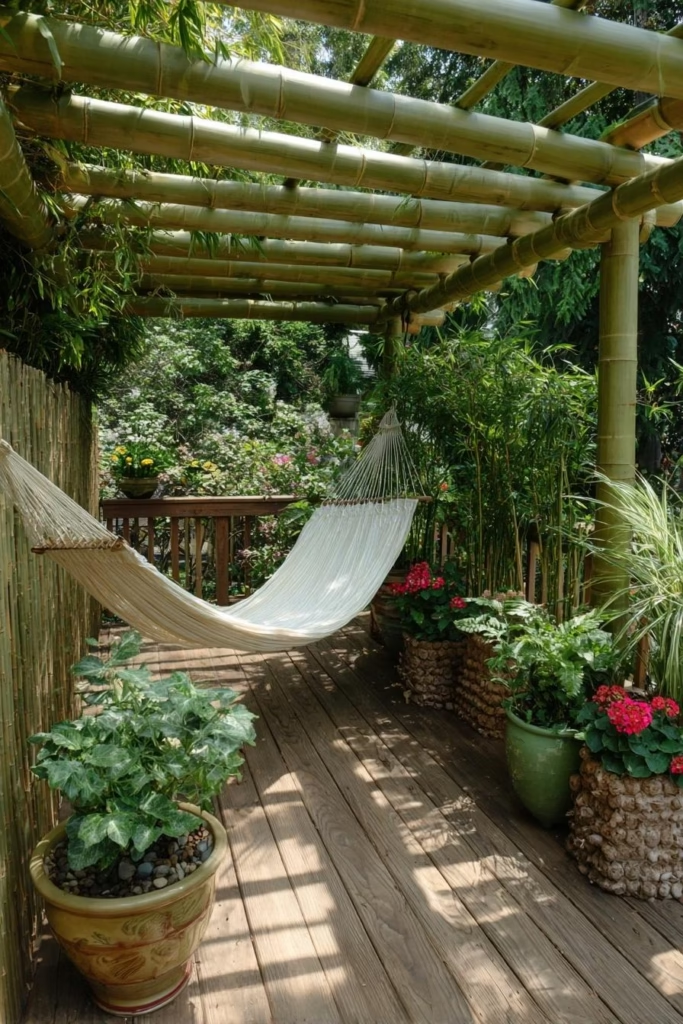
Who is this for? Minimalists. Anyone who wants a shade structure that’s lightweight, portable-ish, and builds a completely zen atmosphere without a massive budget.
Why it works: Bamboo poles are surprisingly strong, naturally weather-resistant, and visually lightweight — so the structure reads as relaxed and casual rather than constructed. Combined with a hammock, it’s the ultimate low-maintenance escape.
When to use it: Small decks, side yards, or any narrow space where a standard pergola would feel oversized.
Practical tip: Bamboo poles need to be sealed with a UV-resistant wood sealer before installation or they’ll crack in direct sun within a season. Also, buy poles that are at least 2–3 inches in diameter for structural integrity — thin bamboo is beautiful but it bows under any real tension.
13. White Pergola With Wisteria and Striped Curtains: Farmhouse Romance

Who is this for? Anyone who loves that collected-over-time, imperfect, lived-in look. If your decor inside leans farmhouse, cottage, or Provence-style, this exterior setup extends that story outside.
Why it works: The white pergola bounces light rather than absorbing it, which keeps the space underneath feeling bright even when the canopy is dense. Striped curtains (particularly ticking stripe in cream and gray) are an endlessly elegant choice that feels intentional without being precious.
Practical tip: Let wisteria grow unpruned for the first two years to establish the main trunk and branches. Then prune aggressively in late winter (before blooming) to keep it from pulling the structure apart — wisteria is beautiful but it has the strength of a determined toddler.
14. Fabric Canopy Cabana: Resort Energy, Backyard Reality
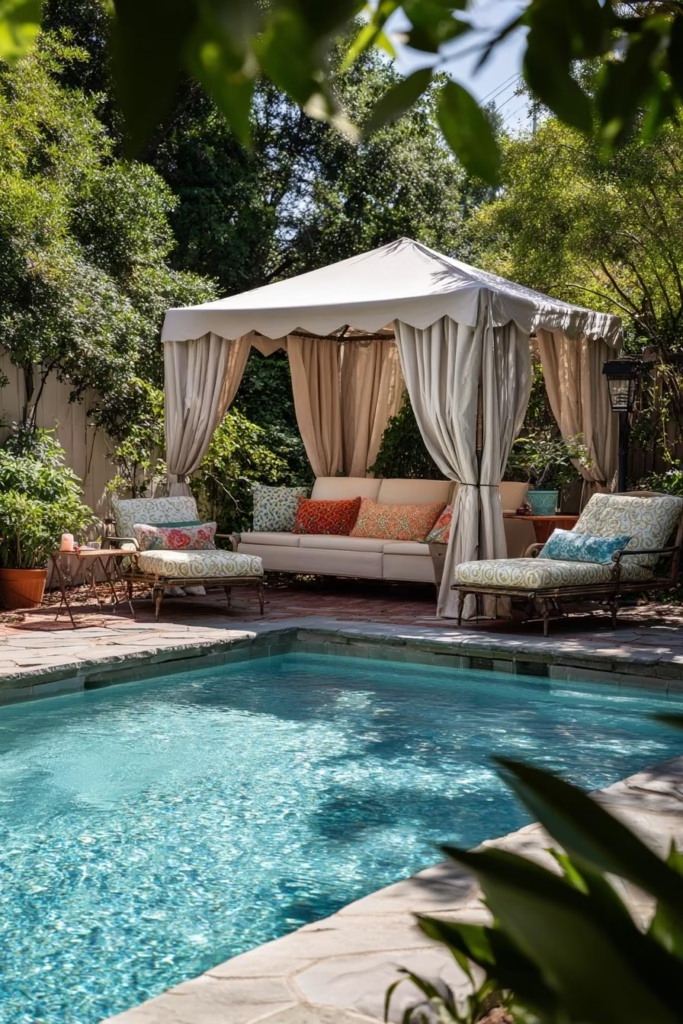
Who is this for? Pool owners who want a shaded lounge area that pulls double duty as a changing space, nap zone, or entertainment spot. Also anyone hosting parties who needs a designated chill-out area away from the main action.
Why it works: Canopy tents with curtain panels provide full overhead and side shade, which is the most complete sun protection on this list short of an actual enclosed porch. They’re also completely temporary — which is either a feature or a limitation depending on your lifestyle.
Practical tip: Weight the base posts of a canopy tent heavily (water weights or sandbag weights designed for event canopies) whenever it’ll be up for more than a day. Canopy tents in an afternoon thunderstorm become projectiles if they’re not secured.
15. The Vine Tunnel Pergola: A Shaded Walkway That Doubles as a Destination
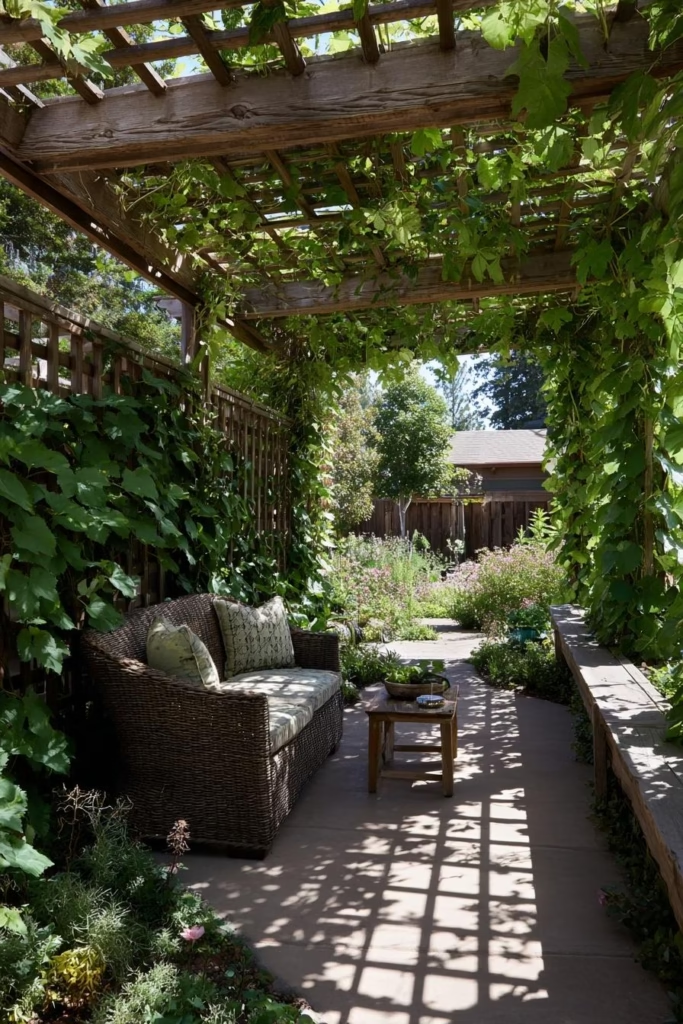
Who is this for? Larger yards where you want to create movement and destination — a shaded path from the house to a garden, a potting shed, or a seating area at the far end of the property.
Why it works: The enclosed nature of a tunnel pergola creates one of the most sheltered micro-climates possible — it’s several degrees cooler than the surrounding yard and the humidity from the plants makes it feel genuinely refreshing. The dappled light through the lattice creates the lattice-shadow pattern on the floor, which is unfairly beautiful.
Practical tip: Plant on both sides of the structure with climbers that will grow inward, and train them toward each other along the roof beams. For a narrow tunnel pergola, keep interior furniture low and simple — the vine architecture is the statement.
16. Rustic Timber Pergola With Draped Curtains: Where Wild Meets Welcoming
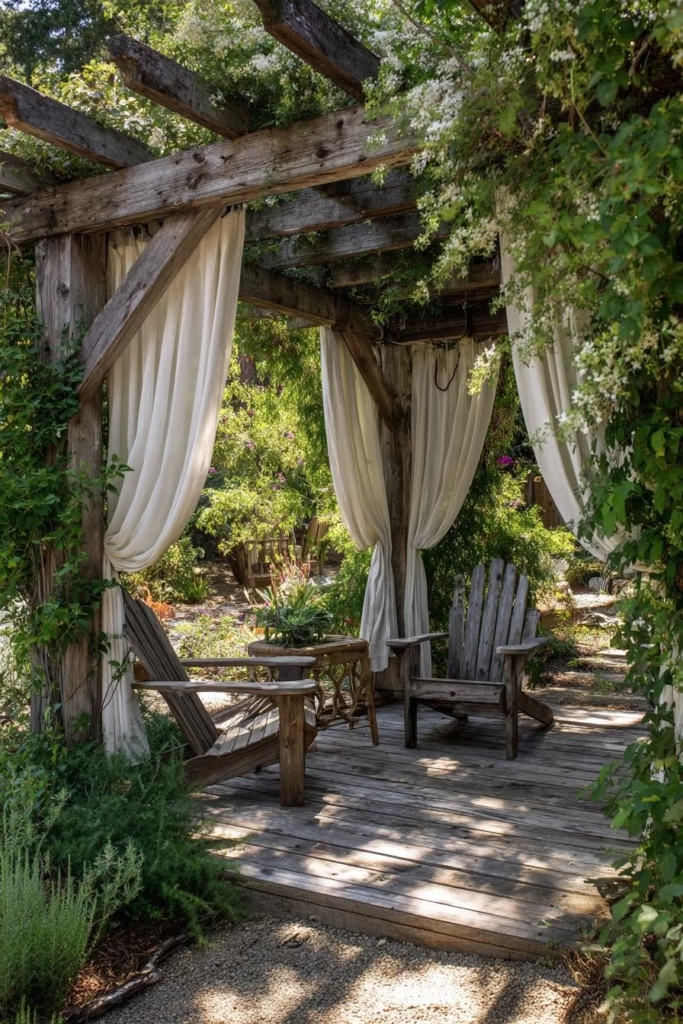
Who is this for? The natural gardener. The person who finds beauty in imperfection and would rather have something that looks like it grew there than something that looks like it was installed.
Why it works: The untreated, unfinished quality of the timber actually becomes more beautiful over time, not less. The curtains create privacy without formality, and the surrounding wild planting means the whole space softens and evolves with every season.
Practical tip: If you’re building a pergola from scratch and want this look, use reclaimed timber rather than fresh-cut lumber. It already has the weathered patina you’re after, and it’s often cheaper than new-growth lumber.
Final Thoughts
Backyard shade isn’t a luxury — it’s what turns your outdoor space from a surface you occasionally look at into a place you actually live in. And the options are wider than most people realize. You don’t need a massive budget or a contractor on speed dial.
Start with what you can do right now: a good umbrella, a set of outdoor curtains, a couple of shade sails. Build toward the bigger structures — the pergola, the gazebo — as your budget and timeline allow. Layer them. Mix them. Let climbing plants take over slowly.
The backyard that finally feels like yours is usually the one that took a few seasons to get there. Plant something. Build something. Hang some curtains. I promise you’ll figure out the rest as you go.