13 Small Bedroom Ideas That Actually Make Your Space Feel Bigger
If your small bedroom feels more like a storage closet than a sanctuary, you’re not alone. Millions of people are navigating tight square footage every single day — whether it’s a studio apartment, a guest room that pulls double duty, or a starter home that’s running out of ideas to give. The problem usually isn’t the size of the room. It’s the approach.
I’ve spent years obsessing over small bedroom ideas, and I can tell you with confidence: the rooms that feel the worst are rarely the smallest ones. They’re the ones where every inch hasn’t been thought through. Meanwhile, some of the most beautiful, deeply livable bedrooms I’ve ever seen were barely big enough for a queen bed. The difference is always intention.
So if you’re staring at your four walls wondering what on earth to do next — good. That means you’re ready. Here are 13 ideas that genuinely work, pulled from real design choices you can actually recreate.
Turn a Narrow Nook Into the Coziest Sleep Alcove You’ve Ever SeenArched alcove bedroom with warm wall sconces, a floating desk, and built-in shelving — proof that narrow doesn’t mean cramped.
This one is for anyone who inherited a room that’s barely wider than a hallway. You know the type — long, narrow, slightly claustrophobic at first glance. The instinct is to fight the shape. Don’t. The best thing you can do with a narrow small bedroom is lean into it completely.
Look at what’s happening in this image: the bed is tucked beneath an arched ceiling alcove, which does something visually interesting — it turns the constraint into a feature. The arched ceiling frames the bed the way a four-poster would. Add two wall-mounted swing-arm sconces on either side, and suddenly you’ve got atmosphere instead of awkwardness.
The floating desk along one side is another move I love for this layout. It doesn’t take up floor space the way a freestanding desk would, and when paired with a slim upholstered chair, the whole thing reads as intentional rather than crowded.
Practical TipSwing-arm sconces mounted at eye level when seated are your best friend in a narrow room. They eliminate the need for table lamps entirely, freeing up surface space on both the desk and any nightstand.
“I’ve noticed that rooms with architectural quirks — the weird angles, the low ceilings, the tight corridors — often end up being the most memorable once you stop treating the quirk as the enemy.”
Built-In Storage Behind the Bed: The Wall That Actually Works For YouFloor-to-ceiling walnut cabinetry wraps the entire headboard wall — extra storage, ambient LED lighting, and visual warmth all in one move.
If you only do one thing to upgrade a small bedroom, make it this. A full built-in storage wall behind your bed does three things at once: it maximizes storage without using any additional floor space, it creates a dramatic focal point that makes the room look professionally designed, and it visually anchors the bed in a way that even an expensive standalone headboard rarely achieves.
The version shown here is genuinely stunning — warm walnut wood, open shelving with integrated LED strips, upper cabinets for hidden storage, and a round mirror centered like a porthole into another dimension. The plants and books break up what could otherwise feel heavy. It’s rich without being oppressive.
You don’t need to go custom millwork to pull this off, though it helps. Many furniture retailers now offer modular wall-unit systems that can be configured specifically for this headboard-wall purpose. The key is going floor-to-ceiling — stopping short makes the room feel lower.
Use warm-toned wood (walnut, oak, teak) rather than painted MDF for a more grounded look Install LED strip lighting under each shelf — it adds depth and eliminates bedside lamps Mix closed upper cabinets with open lower shelves to keep visual noise in check The round mirror is not decorative coincidence — curved shapes soften rectilinear built-ins beautifully A Floating Desk by the Window Is the Workspace You Never Knew You Had Room ForA wall-mounted walnut desk beside sheer curtains — natural light, a swing sconce for evening work, and a compact upholstered chair that doesn’t overwhelm.
Here’s a question I get asked constantly: how do you fit a proper workspace into a small bedroom without making the whole room feel like an office? The answer, every single time, is the floating desk. Not a freestanding unit, not a corner workstation — a wall-mounted shelf-style surface, positioned right at the window.
What you’re seeing here is nearly perfect execution. The walnut floating shelf reads as a desk when there’s a chair pulled up to it and as a decorative console at all other times. The swing sconce provides task lighting after dark without requiring any desk real estate. And that plant? It’s doing more work than you’d think — it softens the edge of the desk and connects the work zone to the natural light source in a way that feels organic.
In my experience, a floating desk positioned beside (rather than directly in front of) a window is actually better for working. You get the ambient brightness without the glare directly in your eyes or on a screen.
When to Use ThisBest for bedrooms where you need to occasionally work from home but don’t want the space to feel permanently office-like. The floating desk “disappears” when not in use in a way a full desk never will.
Window Seat With Built-In Drawers: The Small Bedroom Secret WeaponAn arched window seat with hidden drawer storage and flanking built-in shelves — a reading nook that doubles as serious organizational square footage.
If your small bedroom happens to have a window alcove — or even just a wall where you could create one — a built-in window seat with drawer storage underneath is one of those ideas that pays dividends forever. You gain seating, storage, a reading nook, and a visual anchor for the room all from a single construction project.
What elevates this particular version beyond the ordinary is the full-height flanking bookshelves on either side and that stunning arched window above. The linen cushion is thick and properly scaled — too many window seats are ruined by thin, decorative-only cushions that nobody actually wants to sit on. Pair the seat with sconces rather than overhead lighting for that cozy-corner effect, and you’ve created a destination within your bedroom.
The drawers underneath are the practical hero here. In a small bedroom, every inch of underused space is wasted opportunity. Seasonal linens, extra pillows, books you’re not currently reading — all of it can live quietly in those drawers rather than in a closet you don’t have.
“If you’re working with a small space and considering this, I’d say: commit to the flanking shelves. The window seat alone is nice. With built-in shelving wrapping it on both sides, it becomes the room’s defining feature.”
The Mirrored Wardrobe Door That Doubles Your Room (Optically, at Least)A full-length mirror panel on the wardrobe door reflects the window bench and natural light — one of the most effective visual-expansion tricks in small bedroom design.
There’s a reason interior designers reach for mirrors so consistently in small spaces — they’re not being lazy, they’re being smart. A full-length mirror on a wardrobe or closet door does something a decorative wall mirror almost never does: it reflects an entire zone of the room, effectively doubling your perception of depth.
In this image, the mirrored panel on the wardrobe door is positioned so that it reflects the window bench on the opposite side, which then reflects natural light. The result is a feedback loop of brightness and perceived space that genuinely makes the room feel larger. The cove lighting running along the ceiling adds warmth without visual bulk, and the open shelving on the back wall creates depth rather than a solid barrier.
What I particularly love here is how the mirror is framed with a thin black trim rather than sitting flush as a plain reflective surface. That detail makes it feel like a design choice rather than a practical afterthought — which is the difference between a room that looks considered and one that just looks small and functional.
The Open Wardrobe + Vanity Combo That Makes Getting Ready Feel EffortlessAn open wardrobe system flanking a built-in vanity nook — practical dressing room energy in a standard-sized bedroom wall.
If a dedicated dressing room isn’t in the cards for your space, consider this approach: using one full wall of your small bedroom to create what is essentially a mini dressing zone. An open wardrobe system — the kind with hanging rails, adjustable shelves, and deep drawers — paired with a slim vanity table and a large mirror can do most of the work a walk-in closet would.
The version here uses an all-white palette for the storage wall, which is a considered choice. White built-ins in a small bedroom read as architecture rather than furniture, which means they visually recede. The velvet chair in a muted taupe is the only visual moment that stands apart, and it grounds the whole composition without pulling focus from the practical purpose of the wall.
Notice the grid-patterned mirror above the vanity. It’s large — properly large — which matters enormously. A small vanity mirror in this context would feel tentative and diminish the whole effect. Going big here reflects more of the room, pulls in the curtain and window light, and turns a practical surface into a real design statement.
Practical TipHang curtains from ceiling height to the floor, even if your window doesn’t require it. In this image, those floor-length curtains beside the wardrobe make the ceiling feel taller and the whole wall more cohesive.
“The rooms that feel the worst are rarely the smallest. They’re the ones where every inch hasn’t been thought through.”
Raised Platform Bed With Under-Bed Storage: Maximum Storage, Zero ClutterA raised platform bed with full-height cabinet storage underneath — the under-bed space becomes a proper storage system, and the elevation creates a clear visual separation between sleeping and working zones.
When you’re dealing with a small bedroom that needs to accommodate both sleeping and working, the platform bed with integrated storage is one of the most intelligent layouts you can choose. Raise the bed on a custom cabinet base and you gain: storage equivalent to a chest of drawers, a clearly defined sleeping zone, and a visual separation from the desk area that makes the room feel less like a single-function space.
What makes this example work especially well is the open bookshelf tower that acts as a room divider between the desk zone and the bedroom proper. The black metal frame keeps it from feeling solid — you can see through it — while still establishing two distinct areas within what appears to be one room. And those plants. They’re doing enormous lifting in terms of making this structured, storage-heavy room feel inhabited and alive.
This layout suits someone who works from home and doesn’t have a separate home office. The psychological value of having sleep and work visually separated — even in a small bedroom — is real and genuinely impacts how well you rest.
“In my experience, people underestimate how much the raised bed changes the feeling of a room. It’s not just storage — it’s a statement that your bedroom was designed, not assembled.”
A Bold Rug as the Room’s Foundation: Color Strategy for Minimalist SpacesA rich Moroccan-style rug grounds a deliberately neutral bedroom — the single bold pattern does the heavy lifting so nothing else has to.
There’s a real fear that most people have when decorating a small bedroom: adding color or pattern will make it feel smaller. In most cases, that fear leads to beige-on-beige rooms that are technically correct but emotionally inert. The truth is more nuanced — one bold pattern, applied in the right place, makes a small bedroom feel more intentional, not more crowded.
The rug is the ideal vehicle for that pattern. It lives on the floor, which means it doesn’t compete visually with your walls or your bed. It defines the zone of the room without taking up any vertical space. And it gives your eye somewhere specific to land, which paradoxically makes the overall space feel more organized, not busier.
The bedroom here nails the balance. Everything else — the bed, the wardrobe, the window shelf, the walls — is deliberately quiet. The Moroccan-style rug with its reds, teals, and golds is the room’s personality, and because it has that stage to itself, it reads as a design decision rather than clutter.
Choose a rug that’s larger than you think you need — undersized rugs shrink a room visually Position it so it extends under the lower third of the bed frame on all accessible sides If the rest of your bedroom is neutral, a high-pile or Moroccan-style rug adds warmth without additional furniture The Barely-There Bedroom: What Extreme Minimalism Actually Looks Like in PracticeDusty blue walls, white linen, a single branch in a vase — minimalism that feels considered rather than empty.
Some small bedrooms don’t need more things — they need fewer. If you’re someone who finds visual calm genuinely restorative, the extreme minimalist approach is not a stylistic compromise. It’s a deliberate choice that, when executed well, produces one of the most beautiful bedroom environments possible.
The secret to making minimalism feel warm rather than clinical is in the material choices and the single organic element. Here, the dusty blue-gray walls do something interesting — they’re cool enough to feel airy, but deep enough that the room doesn’t feel sterile. The white linen is slightly rumpled, which is intentional: perfect linen is cold, slightly disheveled linen is inviting. And that single architectural branch in a glass vase? It’s the room’s heartbeat. Without it, this space would tip into showroom territory.
Full-length sheer curtains from ceiling to floor are doing essential work here, too. They diffuse the light to a soft glow, add height, and give the eye a vertical line to follow — all without adding any color or pattern to compete with the room’s calm palette.
“If you’re working with a small space and feeling overwhelmed by too much stuff — try removing before you add. Sometimes the answer is genuinely less.”
The Lift-Up Storage Bed: Hidden Capacity That Doesn’t Change Your Aesthetic at AllThe lift-up storage bed open — a full compartment of hidden storage beneath, with none of the visual weight of drawers on the sides.
If you want the under-bed storage of a platform design without committing to a raised aesthetic, the ottoman-style lift-up bed frame is your best option. The mattress and base lift as one unit on gas pistons, revealing a deep, accessible storage compartment that can swallow duvets, seasonal pillows, spare bedding, luggage — anything that currently has no home.
The boho-warm styling of this bedroom is a good example of how the storage bed doesn’t dictate your entire aesthetic. The vintage rug, the woven wall hanging, the palm plant — none of it is compromised by the fact that the bed frame is essentially a giant ottoman with a mattress on top. When it’s closed, it looks like any other low-profile bed frame.
The one practical consideration worth flagging: you do need clear access to the foot of the bed to lift it. If your room layout places the foot of the bed very close to a wall or dresser, this won’t work. But for most small bedrooms with some free floor space at the foot, it’s one of the highest-return additions you can make.
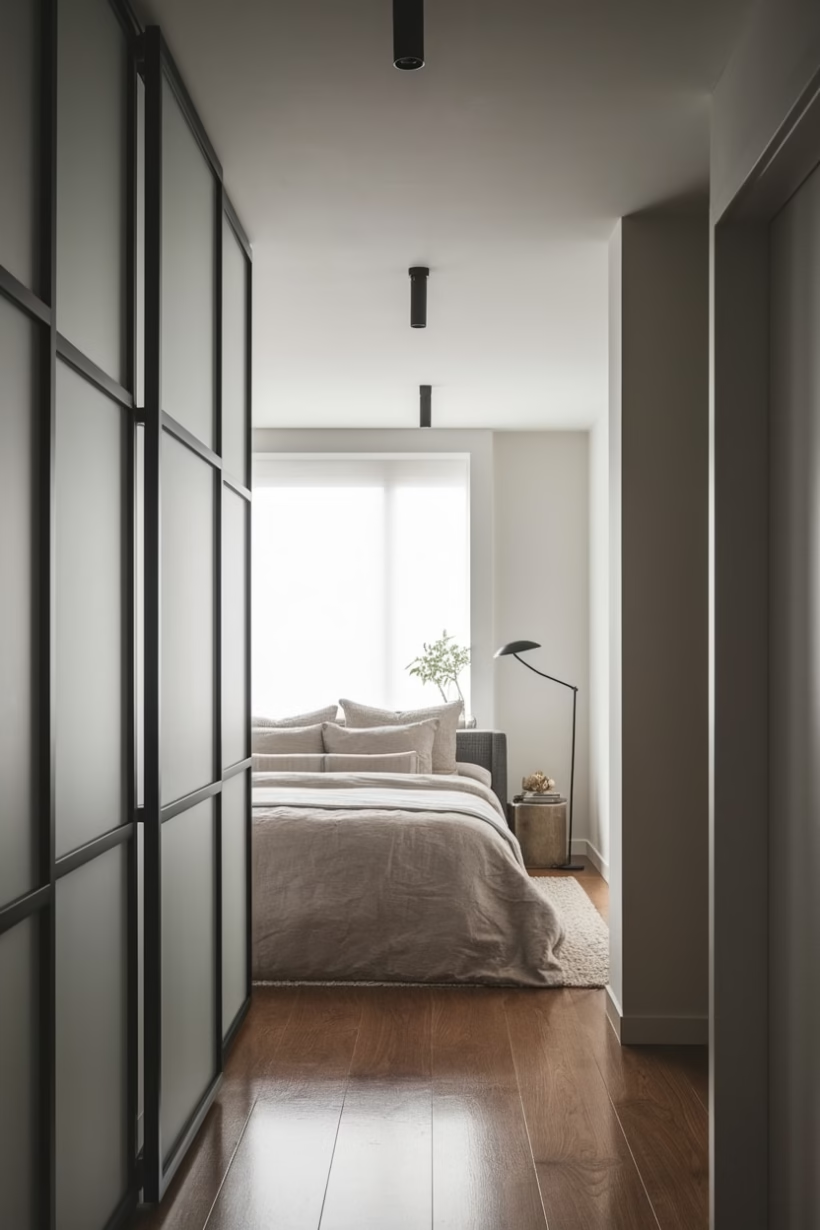
Sliding Frosted Doors: The Room Divider That Feels Like ArchitectureFull-height frosted panel sliding doors flank the entrance — they feel more like a feature wall than a wardrobe, and the black metal grid framing gives them an industrial-residential edge.
Sliding doors are a practical necessity in a small bedroom — they don’t swing open and claim floor space the way hinged doors do. But the version you choose matters enormously for how the room reads. Standard mirrored sliding wardrobe doors can feel dated. Plain white panels can feel temporary. What works better, and what you see increasingly in well-designed small bedrooms, are frosted glass panels in a metal grid frame.
The example here is particularly successful because the doors run floor-to-ceiling and span the full length of that hallway stretch — the effect is closer to a Japanese shoji screen than a wardrobe. The frosted glass allows light to pass through while obscuring the contents, which keeps the visual line clean without sacrificing natural brightness. The black metal grid provides the graphic structure that stops the whole composition from feeling soft or diffuse.
Two pendant tube spotlights on the ceiling complete the picture — directional, minimal, architectural. They feel chosen rather than default, which is exactly the energy you want in a small bedroom that’s working hard.
When to Use ThisBest for bedrooms that double as a dressing corridor, or where the wardrobe faces the bed directly. The semi-transparent frosted panels mean you’re not waking up looking directly at your closet — you’re looking at a softly lit architectural panel.
The Ornate Mirror Against a Plain Wall: Statement Without NoiseAn oversized antique-style mirror leaning against a muted gray wall — all the visual drama of a feature wall without the irreversible commitment.
There’s an argument to be made that a single oversized mirror leaning against a wall is the most flexible, high-impact thing you can do to a small bedroom. It reflects light, creates depth, adds height, and provides a genuinely useful function — all without drilling a single hole (unless you want to). The trick is scale and placement.
The mirror shown here is doing everything right. It’s tall enough to reach nearly ceiling height, which draws the eye upward and makes the room feel more spacious. The ornate gilt frame against the spare gray wall creates a tension between the decorative and the minimal that’s far more interesting than either would be alone. And the large palm plant in the foreground adds a layer of real depth — you’re not just seeing a room, you’re seeing a room through a room through a mirror.
Position this kind of mirror so it reflects the room’s best feature — the window, a beautiful piece of furniture, the plant — rather than just the blank opposite wall. That’s what turns a practical object into a design element.
The Low Platform Bed: Why Sleeping Closer to the Floor Changes EverythingA natural wood platform bed sitting just inches from the floor — the low profile opens up the room’s upper half and shifts the entire atmosphere toward calm.
The final idea is in many ways the most foundational: the choice of bed frame height shapes the entire atmosphere of a small bedroom before anything else goes in. A high bed frame with visible legs creates a certain busyness beneath it that the eye registers as visual noise. A low platform bed — like this natural wood version sitting just inches off the floor — frees up the upper portion of the room and creates a sense of calm that’s almost architectural in effect.
There’s a reason Japanese and Scandinavian interiors both gravitate toward the low bed. Visually, it shifts the room’s center of gravity downward, which makes ceilings feel higher and walls feel farther apart. Practically, it eliminates the under-bed dust problem (there’s almost no under-bed) while lending the room a grounded, serene quality that taller furniture rarely achieves.
The natural wood finish here — pale, barely-there grain — is ideal for a small bedroom because it reads as organic rather than imposing. Pair it with washed linen in a similar warm neutral, a dense shag rug, and a couple of plants by the window, and you have a small bedroom that doesn’t apologize for its size. It simply inhabits it.
“I’ve recommended the low platform bed to more people than any other single piece of furniture. It almost always makes a small bedroom look and feel better than what came before it — and it’s one of the most accessible changes you can make.”
Final ThoughtsSmall bedroom design isn’t about tricks. It isn’t about painting one wall a dark color and hoping for the best, or filling every inch with storage because more organization equals more space (it doesn’t). The bedrooms that actually work — the ones that feel like a retreat rather than a compromise — are built on clarity about what the room needs to do and honesty about what’s taking up space without earning it.
Pick one idea from this list that speaks to your specific frustration. Not the one that looks the most impressive, but the one that solves the actual problem you have. Start there. Small bedroom transformations almost always happen one considered decision at a time — and that first decision tends to make the next one obvious.
Your room is small. It doesn’t have to feel that way.